Water Resources are among the most valuable natural resources on Earth, supporting life, economic development, agriculture, industry, and healthy ecosystems. Freshwater is essential for drinking, food production, sanitation, electricity generation, and biodiversity. As the global population continues to grow and climate change affects rainfall patterns, protecting and managing water resources has become more important than ever.
Water covers about 71% of the Earth’s surface, but only a small percentage is available as fresh water suitable for human use. Rivers, lakes, groundwater, reservoirs, glaciers, and wetlands provide the freshwater needed by communities around the world. Sustainable management of these resources ensures that present and future generations have access to clean and reliable water.
Importance of Water Resources
Water Resources play a critical role in every aspect of life. Clean water supports public health by providing safe drinking water, improving sanitation, and reducing the spread of waterborne diseases. Agriculture depends on reliable water supplies for irrigation, livestock, and crop production, helping ensure global food security.
Industries use water for manufacturing, cooling systems, mining, and energy production. Hydropower plants generate renewable electricity using flowing water, while healthy rivers and wetlands provide habitats for fish, birds, and other wildlife. Water resources also contribute to tourism, recreation, and local economies.
Types of Water Resources
Water resources can be divided into several major categories:
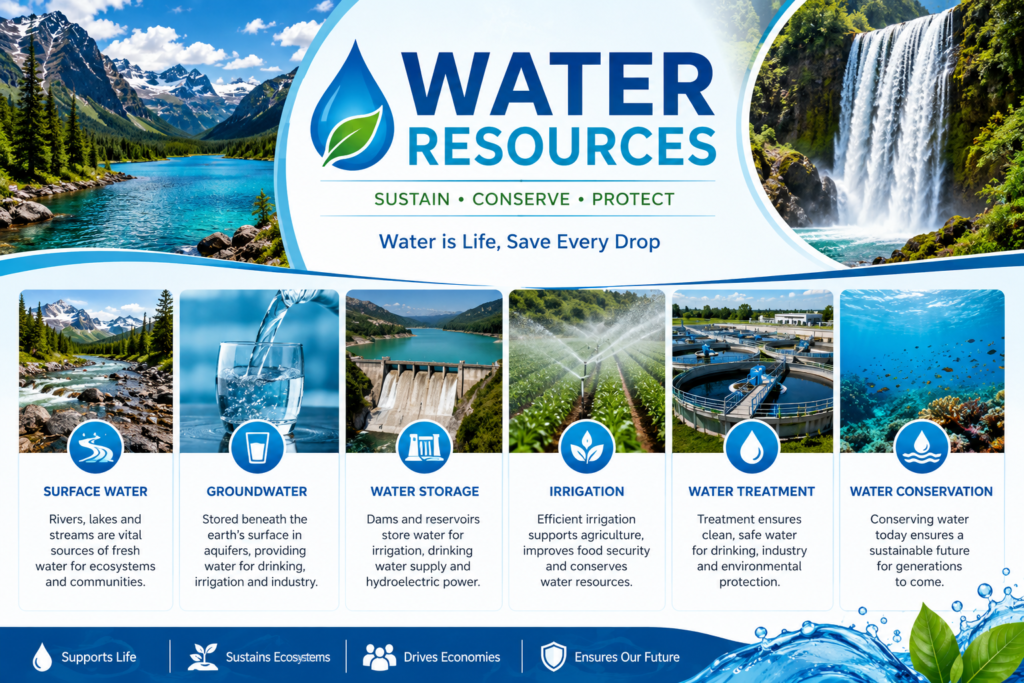
Surface Water includes rivers, lakes, streams, reservoirs, and wetlands. These sources provide drinking water, irrigation, transportation, and hydroelectric power.
Groundwater is stored beneath the Earth’s surface in underground aquifers. It supplies water for millions of people, especially in areas where surface water is limited.
Rainwater is an important renewable resource that can be collected and stored through rainwater harvesting systems for domestic, agricultural, and industrial use.
Glaciers and Ice Caps store large amounts of freshwater and gradually release water into rivers, especially during warmer seasons.
Sustainable Management of Water Resources
Effective management of Water Resources focuses on protecting water quality while ensuring sufficient supply for people, agriculture, industry, and the environment. Governments, organizations, and communities work together to improve water conservation through modern infrastructure, efficient irrigation systems, wastewater treatment, and environmental protection.
Integrated Water Resources Management (IWRM) encourages cooperation among different sectors to balance environmental, social, and economic needs. Sustainable planning reduces water waste, improves efficiency, and protects freshwater ecosystems from pollution and overuse.
Water Resources and Climate Change
Climate change is placing increasing pressure on water resources worldwide. Rising temperatures, changing rainfall patterns, prolonged droughts, floods, and melting glaciers affect both water availability and water quality.
Many regions experience seasonal water shortages, while others face destructive flooding caused by extreme weather events. Adapting to these challenges requires stronger water infrastructure, better storage systems, improved forecasting, and climate-resilient resource management strategies.
Water Conservation Strategies
Protecting Water Resources begins with responsible water use. Individuals, businesses, and governments can conserve water through simple but effective actions such as repairing leaks, using water-efficient appliances, recycling treated wastewater, and improving irrigation efficiency.
Rainwater harvesting systems help capture rainfall for household and agricultural use. Modern drip irrigation delivers water directly to plant roots, reducing waste while increasing crop productivity. Protecting forests, wetlands, and watersheds also improves natural water storage and filtration.
Public education plays an important role in encouraging responsible water use and promoting long-term sustainability.
Economic and Environmental Benefits
Healthy Water Resources support strong economies by supplying water for agriculture, manufacturing, tourism, transportation, and renewable energy generation. Reliable water systems improve business productivity, create employment opportunities, and strengthen food production.
Environmentally, clean water protects biodiversity, maintains wetlands, supports aquatic ecosystems, and preserves natural habitats. Conserving freshwater resources also reduces pollution, improves ecosystem resilience, and helps communities adapt to climate change.
The Future of Water Resources
The future of Water Resources depends on innovation, responsible management, and international cooperation. Advances in desalination, smart water monitoring, wastewater recycling, digital water management, and efficient irrigation technologies are improving water security around the world.
Governments, researchers, industries, and local communities must continue investing in sustainable infrastructure and conservation programs. Protecting rivers, lakes, groundwater, and wetlands today will help ensure clean water supplies for future generations while supporting environmental protection and economic growth.
Conclusion
Water Resources are essential for life, environmental sustainability, and global development. They provide clean drinking water, support agriculture and industry, generate renewable energy, and maintain healthy ecosystems. Through sustainable management, conservation, technological innovation, and responsible water use, we can protect these valuable natural resources and build a healthier, more sustainable future for everyone.