
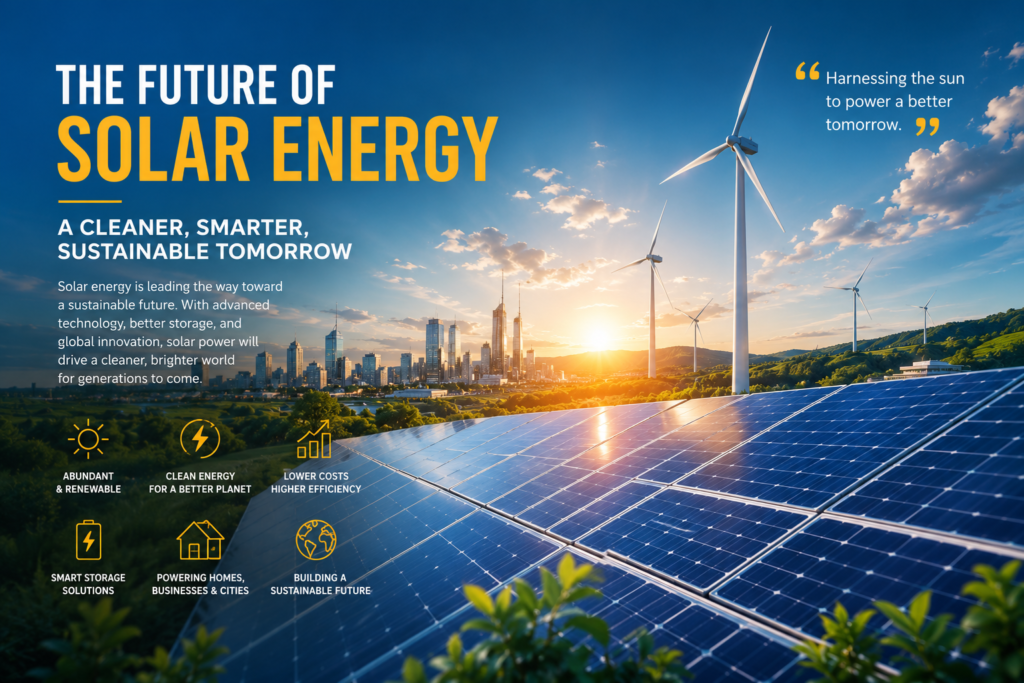
The Future of Solar Energy is shaping the next generation of clean, reliable, and sustainable power worldwide. As governments, businesses, and homeowners continue investing in renewable energy, solar power has become one of the fastest-growing electricity sources on the planet. Technological innovation, declining installation costs, improved energy storage, and supportive government policies are making solar energy more accessible than ever before. The future of solar energy is not only about producing electricity from sunlight but also about creating a cleaner environment, strengthening energy security, and supporting long-term economic growth.
Solar energy is now considered one of the most important solutions for reducing greenhouse gas emissions and limiting climate change. With abundant sunlight available across much of the world, solar power offers an environmentally friendly alternative to traditional fossil fuels while helping countries achieve their sustainability goals.
The Future of Solar Energy and Renewable Innovation
The Future of Solar Energy depends on continuous innovation in photovoltaic technology. Modern solar panels are becoming more efficient, durable, and affordable than previous generations. Researchers are developing high-efficiency solar cells, bifacial panels that capture sunlight from both sides, flexible solar modules, and building-integrated photovoltaics that blend seamlessly into modern architecture.
Artificial intelligence, automation, and smart monitoring systems are also improving solar power performance. These technologies help detect faults, optimize electricity production, and reduce maintenance costs, making solar installations more reliable for residential, commercial, and industrial users
The Future of Solar Energy in Homes and Businesses
The growing adoption of rooftop solar systems is transforming how homes and businesses generate electricity. Homeowners can reduce electricity bills, increase energy independence, and lower their environmental impact by producing clean power directly from their rooftops.
Commercial buildings, factories, shopping centers, schools, and hospitals are also investing in solar energy systems to reduce operating costs and improve sustainability. Businesses increasingly recognize that renewable energy investments strengthen their environmental reputation while providing long-term financial savings.
The Future of Solar Energy and Energy Storage
One of the biggest developments supporting The Future of Solar Energy is energy storage technology. Advanced lithium-ion batteries, solid-state batteries, and emerging storage solutions allow excess solar electricity to be stored for use during the evening or periods of cloudy weather.
Battery storage improves grid stability, increases energy reliability, and enables renewable electricity to meet demand more consistently. As battery technology becomes more affordable, solar energy systems will become even more efficient and practical for households, businesses, and utility-scale power plants.
Environmental Benefits of The Future of Solar Energy
The environmental advantages of solar power continue to drive global investment. Solar energy generates electricity without producing direct greenhouse gas emissions or air pollution during operation. This contributes to cleaner air, healthier communities, and reduced dependence on fossil fuels.
Expanding solar energy also helps conserve natural resources, reduce water consumption compared with many conventional power plants, and protect ecosystems from the environmental impacts associated with fossil fuel extraction and combustion. These benefits make solar energy an essential component of sustainable development.
Economic Opportunities Created by The Future of Solar Energy
The Future of Solar Energy is creating millions of employment opportunities worldwide. Engineers, electricians, construction workers, researchers, software developers, manufacturers, and maintenance specialists all contribute to the rapidly expanding solar industry.
Investment in solar infrastructure stimulates economic growth by attracting private investment, encouraging technological innovation, and strengthening local manufacturing. Countries investing in renewable energy improve their energy security while reducing dependence on imported fuels and supporting long-term economic resilience.
Challenges Facing The Future of Solar Energy
Despite remarkable progress, several challenges remain. Solar electricity production depends on weather conditions and daylight availability. Large-scale deployment also requires continued investment in transmission infrastructure, smart grids, battery storage, and recycling technologies for end-of-life solar panels.
Governments, industry leaders, and researchers are working together to address these challenges through innovation, improved regulations, and international collaboration. Continued technological progress is expected to make solar energy even more efficient, affordable, and sustainable in the coming decades.
The Future of Solar Energy in the Global Energy
The global transition toward low-carbon energy systems places solar power at the center of future electricity generation. Combined with wind energy, hydropower, geothermal energy, and green hydrogen, solar energy will help create a diversified and resilient energy system capable of meeting growing global demand.
Smart grids, digital energy management, artificial intelligence, and distributed energy resources will further strengthen the role of solar power in creating a cleaner and more flexible electricity network. As technology advances, solar energy will continue supporting climate goals while improving access to affordable electricity around the world.
The Future of Solar Energy represents one of the most important opportunities for building a cleaner, smarter, and more sustainable world. Continuous improvements in solar panel efficiency, battery storage, smart energy systems, and renewable technologies are transforming the global energy landscape. As investment, innovation, and international cooperation continue to grow, solar energy will remain a cornerstone of the global transition toward reliable, affordable, and environmentally responsible power for future generations.