
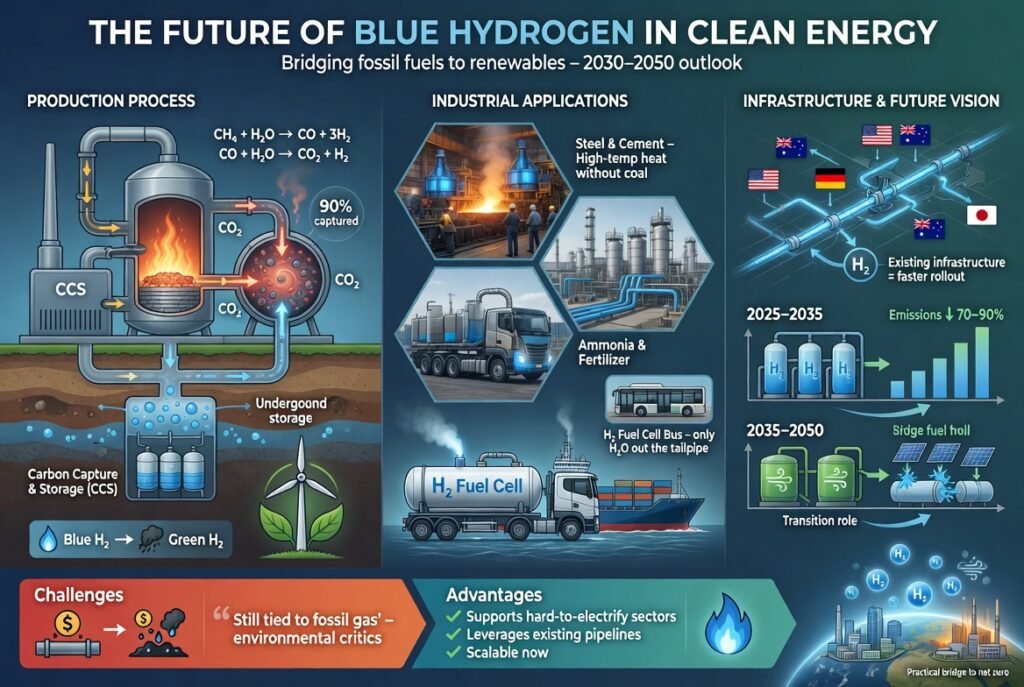
The Future of Blue Hydrogen in Clean Energy is becoming an important topic in the global transition toward lower-carbon energy systems. As countries work to reduce greenhouse gas emissions while maintaining reliable energy supplies, blue hydrogen is emerging as a practical solution for industries that are difficult to electrify. Produced primarily from natural gas through steam methane reforming or autothermal reforming, blue hydrogen uses carbon capture, utilization, and storage (CCUS) technologies to capture a significant portion of the carbon dioxide generated during production.
Blue hydrogen offers a bridge between conventional fossil fuels and renewable hydrogen technologies. It enables countries to build hydrogen infrastructure while supporting economic growth, industrial development, and energy security during the transition to cleaner energy systems.
The Future of Blue Hydrogen in Clean Energy and Hydrogen Production
The Future of Blue Hydrogen in Clean Energy depends on efficient hydrogen production technologies and effective carbon capture systems. Natural gas remains the primary feedstock for blue hydrogen production because of its availability and established infrastructure.
During production, hydrogen is separated from natural gas, while carbon dioxide emissions are captured before entering the atmosphere. Captured carbon can be permanently stored underground or used in industrial applications, reducing the overall carbon footprint compared with conventional hydrogen production.
As carbon capture technologies continue to improve, blue hydrogen production is expected to become more efficient and environmentally responsible.
Benefits of The Future of Blue Hydrogen in Clean Energy
One of the greatest advantages of The Future of Blue Hydrogen in Clean Energy is its ability to reduce emissions while utilizing existing natural gas infrastructure. Many countries already have pipelines, storage facilities, and industrial systems that can support blue hydrogen production without requiring complete infrastructure replacement.
Blue hydrogen also strengthens energy security by diversifying energy sources. It supports reliable electricity generation, industrial heating, heavy transportation, and chemical manufacturing while helping reduce dependence on higher-emission fuels.
The growing hydrogen economy is expected to create employment opportunities, stimulate investment, and encourage technological innovation across the energy sector.
Industrial Applications
Heavy industries such as steel, cement, refining, petrochemicals, fertilizers, and chemical manufacturing require high-temperature heat that is difficult to achieve using electricity alone. Blue hydrogen provides a cleaner alternative for these industries while supporting efforts to reduce industrial carbon emissions.
Blue hydrogen can also fuel heavy-duty trucks, buses, ships, and trains equipped with hydrogen fuel cells. In addition, it supports backup power systems, electricity generation, and large-scale energy storage for renewable energy integration.
Environmental Considerations
Although blue hydrogen significantly lowers emissions compared with conventional fossil fuels, its environmental performance depends largely on carbon capture efficiency and methane emission management during natural gas production.
High capture rates combined with responsible natural gas operations can substantially reduce greenhouse gas emissions. Continued improvements in methane monitoring, leak detection, and carbon storage technologies will further strengthen the environmental benefits of blue hydrogen.
Many experts view blue hydrogen as an important transitional solution while renewable hydrogen technologies continue to expand.
Challenges Facing The Future of Blue Hydrogen in Clean Energy
Despite its advantages, The Future of Blue Hydrogen in Clean Energy faces several challenges. Carbon capture systems increase production costs, and developing storage infrastructure requires significant investment. Public acceptance of carbon storage projects and supportive government policies are also important for long-term success.
The availability and price of natural gas directly influence blue hydrogen production costs. At the same time, continued improvements in green hydrogen technologies may increase competition as renewable electricity becomes more affordable.
Addressing these challenges will require innovation, international collaboration, and long-term investment in hydrogen infrastructure.
Blue Hydrogen and the Global Energy Transition
The global transition toward cleaner energy will likely include multiple hydrogen technologies. Blue hydrogen can complement renewable energy by providing reliable fuel for sectors that are difficult to decarbonize while supporting the gradual expansion of green hydrogen.
Many countries are investing in hydrogen hubs, pipeline networks, export facilities, and carbon capture projects to build a competitive hydrogen economy. These investments help accelerate the transition toward lower-carbon industries while maintaining energy reliability and economic growth.
Blue hydrogen also supports the integration of renewable electricity by providing flexible energy storage and backup generation capabilities.
The Future Outlook
The long-term outlook for The Future of Blue Hydrogen in Clean Energy remains promising as governments, energy companies, and research institutions continue investing in cleaner hydrogen technologies. Improvements in carbon capture efficiency, infrastructure development, digital monitoring, and regulatory frameworks are expected to increase the role of blue hydrogen within global energy systems.
While green hydrogen is expected to play a larger role as renewable electricity expands, blue hydrogen is likely to remain an important transitional technology that supports industrial decarbonization, energy security, and economic development.
Conclusion
The Future of Blue Hydrogen in Clean Energy represents an important step in building a lower-carbon energy future. By combining natural gas resources with advanced carbon capture technologies, blue hydrogen provides a practical pathway for reducing emissions while supporting reliable energy supplies. Continued innovation, responsible resource management, and investment in hydrogen infrastructure will help blue hydrogen contribute to a cleaner, more resilient, and sustainable global energy system.