
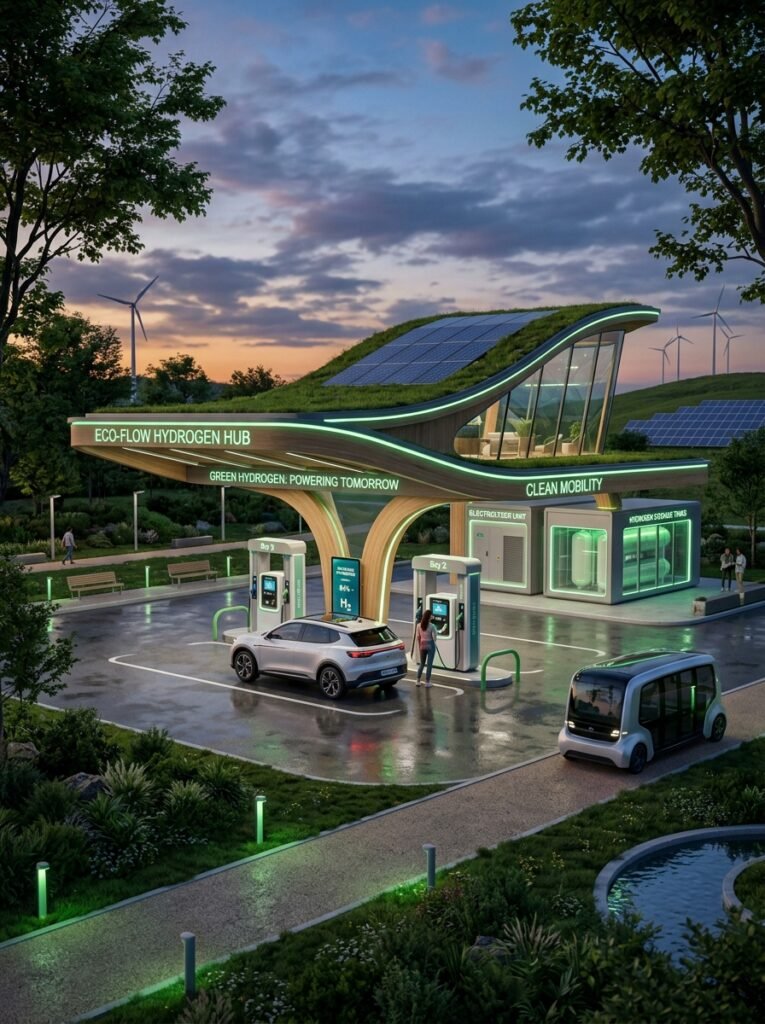
Futuristic green hydrogen station fuels represent the next frontier in sustainable transportation and energy infrastructure. As the world shifts toward carbon-neutral solutions, these advanced refueling hubs are transforming how vehicles, industries, and communities access clean power. Green hydrogen station fuels offer a zero-emission alternative that could reshape our entire energy landscape within the coming decades.
What Are Futuristic Green Hydrogen Station Fuels?
Futuristic green hydrogen station fuels are produced through electrolysis, a process that splits water into hydrogen and oxygen using renewable electricity from solar, wind, or hydropower sources. Unlike conventional hydrogen production, which relies on fossil fuels, green hydrogen generates absolutely no carbon emissions. The resulting fuel powers everything from passenger cars and commercial trucks to buses, trains, and even aircraft.
These next-generation stations integrate cutting-edge technology to store, compress, and dispense hydrogen safely and efficiently. Modern facilities feature automated dispensing systems, real-time monitoring, and intelligent energy management that optimizes production based on demand and renewable energy availability.
The Technology Behind Green Hydrogen Station Fuels
At the heart of every futuristic green hydrogen station lies sophisticated electrolyzer technology. Proton exchange membrane (PEM) electrolyzers and alkaline electrolyzers convert renewable electricity into pure hydrogen gas. This hydrogen is then compressed to high pressures, typically 350 to 700 bar, allowing vehicles to refuel in just three to five minutes—comparable to traditional gasoline stations.
Advanced storage solutions keep hydrogen secure through pressurized tanks, cryogenic liquid storage, or innovative metal hydride systems. Smart grid integration ensures that these stations draw power during peak renewable generation periods, maximizing efficiency and minimizing costs. Artificial intelligence increasingly governs these operations, predicting demand patterns and adjusting production accordingly.
Key Benefits Driving Adoption
The advantages of green hydrogen station fuels extend far beyond environmental protection. First and foremost, they produce only water vapor as a byproduct, eliminating harmful pollutants that contribute to climate change and respiratory illness. This makes them ideal for urban centers struggling with air quality concerns.
Energy independence represents another compelling benefit. Nations investing in hydrogen infrastructure reduce their reliance on imported fossil fuels, strengthening economic security. Additionally, hydrogen serves as an excellent energy storage medium, capturing excess renewable power that would otherwise be wasted during periods of low demand.
For consumers and businesses, the rapid refueling times and extended driving ranges make hydrogen vehicles practical for everyday use. Heavy-duty applications, including long-haul trucking and maritime shipping, particularly benefit from hydrogen’s high energy density and quick replenishmen
The Future of Green Hydrogen Station Fuels Worldwide
Governments and private enterprises across the globe are racing to expand hydrogen infrastructure. Countries like Japan, Germany, South Korea, and Australia have launched ambitious initiatives to build extensive refueling networks. The European Union has committed billions toward establishing a hydrogen economy, while major automakers continue developing fuel-cell vehicles to meet growing demand.
As production scales up, the cost of green hydrogen continues to decline dramatically. Industry experts predict that within the next decade, green hydrogen could achieve price parity with conventional fuels, accelerating widespread adoption. Technological breakthroughs in electrolyzer efficiency and renewable energy generation will further reduce expenses.
Futuristic stations of tomorrow will likely become multifunctional energy hubs, combining hydrogen refueling with electric vehicle charging, renewable power generation, and grid services. These integrated facilities will support diverse transportation needs while contributing to a more resilient and sustainable energy ecosystem.
Overcoming Challenges in Hydrogen Infrastructure
Despite tremendous promise, several obstacles must be addressed before green hydrogen achieves mainstream success. The initial capital investment for building stations remains substantial, requiring supportive government policies and incentives to encourage development. Establishing a comprehensive distribution network demands coordinated planning and significant resources.
Public awareness and acceptance also play crucial roles. Educating consumers about the safety, reliability, and benefits of hydrogen technology helps build confidence and drive demand. Fortunately, modern safety protocols and engineering standards ensure that hydrogen stations operate with exceptional reliability and minimal risk.
Continued research and innovation will overcome these hurdles, paving the way for a hydrogen-powered future. Collaboration between governments, industries, and research institutions accelerates progress and unlocks new possibilities.
Embracing a Cleaner Tomorrow
The transition toward futuristic green hydrogen station fuels marks a pivotal moment in humanity’s pursuit of sustainable energy. By harnessing renewable resources to produce clean hydrogen, we can dramatically reduce greenhouse gas emissions and combat climate change effectively. These stations symbolize hope for a future where transportation no longer compromises environmental health.
As infrastructure expands and technology advances, green hydrogen will increasingly power our vehicles, industries, and communities. The vision of a zero-emission world powered by abundant, clean hydrogen grows more achievable each day. Embracing this revolutionary energy source positions society to thrive while protecting the planet for generations to come.
The journey toward widespread hydrogen adoption requires commitment, investment, and innovation. However, the rewards—cleaner air, energy security, and a sustainable future—make this transformation undeniably worthwhile. Futuristic green hydrogen station fuels are not merely a possibility; they are an essential pathway toward a brighter, greener tomorrow.