Sustainable Water Use in Industry is becoming one of the most important priorities for businesses and governments seeking to balance economic growth with environmental protection. Water is essential for manufacturing, cooling systems, cleaning processes, power generation, mining, food processing, and countless industrial operations. As global demand for freshwater continues to rise, industries must adopt sustainable water management practices that reduce waste, improve efficiency, and protect valuable water resources for future generations.
Industrial water sustainability not only helps conserve natural resources but also reduces operating costs, strengthens environmental compliance, improves corporate reputation, and supports long-term business resilience.
Sustainable Water Use in Industry Through Efficient Water Management
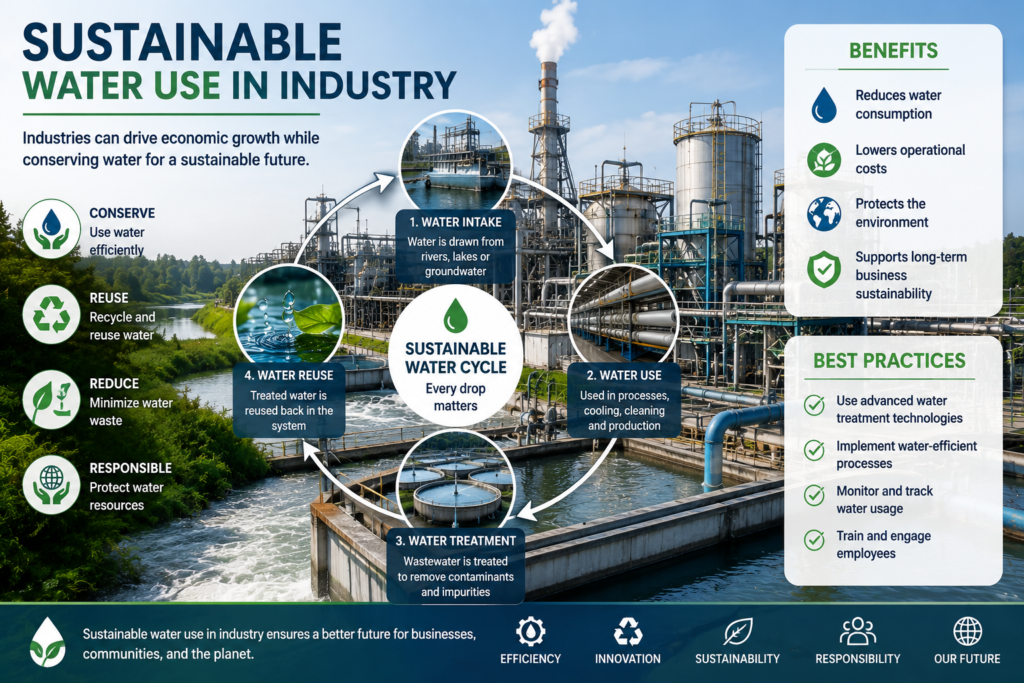
Sustainable Water Use in Industry begins with efficient water management. Many industrial facilities monitor water consumption throughout every stage of production to identify areas where water use can be reduced. Smart water meters, automated monitoring systems, and digital sensors allow companies to detect leaks, optimize water distribution, and improve overall operational efficiency.
Regular maintenance of pipes, valves, pumps, and cooling equipment also prevents unnecessary water losses. By improving system efficiency, industries can reduce freshwater consumption while maintaining high production standards.
Sustainable Water Use in Industry Through Water Recycling
One of the most effective approaches to Sustainable Water Use in Industry is wastewater recycling and reuse. Instead of discharging used water after a single process, many industries treat wastewater and recycle it for cooling, cleaning, irrigation, or manufacturing operations.
Modern wastewater treatment plants remove suspended solids, chemicals, oils, microorganisms, and other contaminants before water is reused. Closed-loop water recycling systems significantly reduce freshwater demand while lowering wastewater discharge into rivers and lakes.
Water recycling not only conserves natural resources but also reduces water procurement and disposal costs for industrial facilities.
Advanced Technologies Supporting Sustainable Water Use in Industry
Modern technologies continue improving Sustainable Water Use in Industry through innovation and automation. Artificial intelligence, cloud-based monitoring platforms, Internet of Things (IoT) sensors, and predictive analytics help industries monitor water quality, forecast demand, and optimize treatment processes in real time.
Advanced membrane filtration, reverse osmosis, ultraviolet disinfection, and biological treatment technologies produce high-quality recycled water suitable for many industrial applications. These innovations increase water efficiency while supporting environmental sustainability.
Environmental Benefits of Sustainable Water Use in Industry
Implementing Sustainable Water Use in Industry provides significant environmental benefits. Reduced freshwater withdrawal protects rivers, lakes, wetlands, and groundwater aquifers that support ecosystems and biodiversity.
Responsible water management also lowers pollution by reducing untreated wastewater discharge into natural water bodies. Efficient industrial processes decrease energy consumption for water pumping and treatment, helping reduce greenhouse gas emissions associated with industrial operations.
Protecting water resources contributes directly to healthier ecosystems, improved public health, and stronger climate resilience.
Challenges to Sustainable Water Use in Industry
Despite its many advantages, implementing Sustainable Water Use in Industry can present several challenges. Upgrading water infrastructure, installing advanced treatment systems, and deploying digital monitoring technologies often require significant initial investment.
Some industries also face technical limitations depending on water quality requirements and manufacturing processes. Additionally, increasing climate variability, droughts, and population growth continue placing greater pressure on available freshwater resources.
However, continuous technological innovation and supportive government policies are making sustainable water management more affordable and accessible across many industrial sectors.
The Future of Sustainable Water Use in Industry
The future of Sustainable Water Use in Industry will depend on innovation, collaboration, and responsible resource management. Smart factories, artificial intelligence, automated water monitoring, desalination technologies, and circular water economy practices will continue improving industrial water efficiency worldwide.
Companies are increasingly adopting Environmental, Social, and Governance (ESG) principles that prioritize sustainable water management alongside carbon reduction and renewable energy investments. International cooperation between governments, researchers, industries, and local communities will play a key role in protecting global freshwater supplies while supporting economic development.
As industries continue embracing sustainable technologies, water conservation will become an essential component of responsible manufacturing and environmental leadership.
Conclusion
Sustainable Water Use in Industry is essential for protecting freshwater resources while supporting economic growth and industrial productivity. Through efficient water management, wastewater recycling, advanced treatment technologies, digital monitoring, and responsible environmental practices, industries can significantly reduce water consumption and minimize pollution. Continued investment in sustainable water solutions will strengthen business resilience, improve environmental protection, and help ensure that clean water remains available for future generations.