How groundwater system works is an essential topic for understanding one of the Earth’s most valuable freshwater resources. Groundwater supplies drinking water for billions of people, supports agriculture, sustains industries, and maintains rivers, lakes, wetlands, and ecosystems. Although groundwater is hidden beneath the Earth’s surface, it continuously moves through soil, sand, gravel, and rock formations in a natural cycle that supports life and environmental sustainability.
Groundwater forms when rain and melting snow soak into the ground instead of flowing directly into rivers or lakes. As water moves downward through layers of soil and rock, it fills underground spaces known as aquifers. These aquifers act as natural reservoirs that store and slowly release freshwater over time.
How Groundwater System Works Through Infiltration
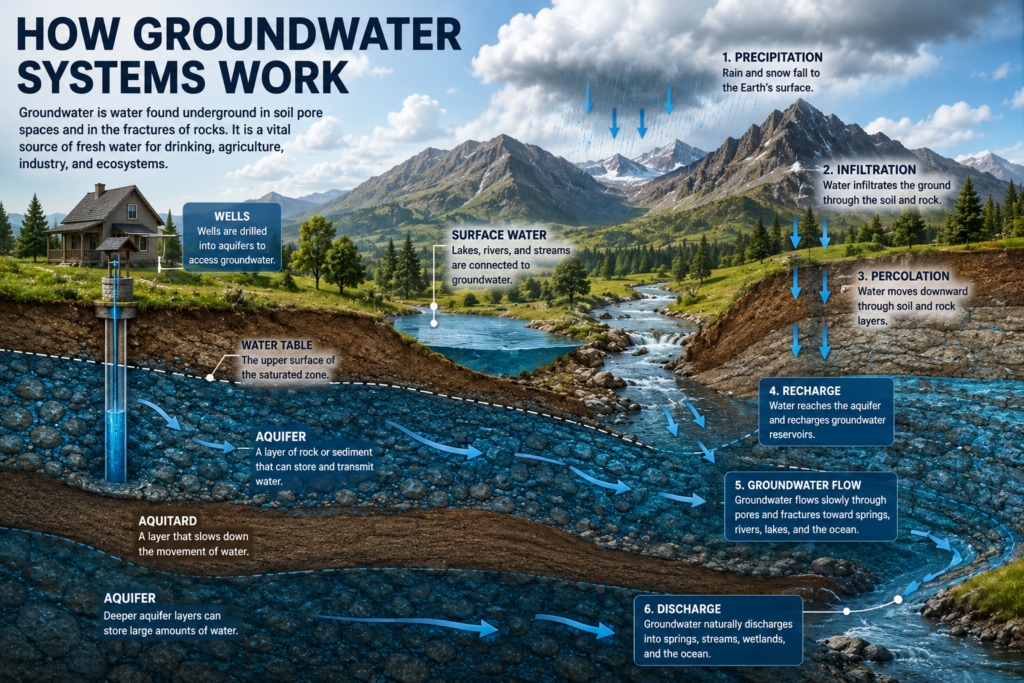
How groundwater system works begins with precipitation. Rainfall and snowmelt fall onto the Earth’s surface, where some water evaporates, some flows into streams, and the remaining water infiltrates the soil.
As the water moves downward, it passes through tiny pores and cracks in soil, sand, and rock. This process is known as infiltration. Gravity pulls the water deeper until it reaches a saturated zone where all spaces within the soil and rock are completely filled with water. This underground storage area forms an aquifer, one of the most important sources of freshwater.
The speed of infiltration depends on soil type, vegetation, land slope, and rainfall intensity. Sandy soils allow faster infiltration, while clay-rich soils slow water movement.
How Groundwater System Works Inside Aquifers
Aquifers are underground layers of permeable rock, sand, or gravel capable of storing and transmitting water. How groundwater system works inside an aquifer is based on natural pressure and gravity. Groundwater slowly flows from higher elevations toward lower elevations, eventually feeding springs, rivers, lakes, wetlands, and even oceans.
Some aquifers are shallow and easily recharged by rainfall, while others are located hundreds of meters underground and may require many years or even centuries to refill naturally. The upper boundary of the saturated zone is called the water table, and its level changes depending on rainfall, drought, and groundwater use.
Groundwater Recharge and Discharge
Recharge is one of the most important stages in how groundwater system works. Recharge occurs when rainfall, rivers, lakes, or melting snow add new water to underground aquifers. Healthy forests, wetlands, and open land increase groundwater recharge by allowing more water to soak into the ground.
Groundwater eventually leaves the aquifer through a process known as discharge. It naturally emerges through springs, feeds rivers during dry seasons, supplies wetlands, or is pumped from wells for drinking water, irrigation, and industrial purposes.
This continuous movement creates a natural groundwater cycle that helps maintain freshwater supplies throughout the year.
Importance of Groundwater Systems
Understanding how groundwater system works helps explain why groundwater is one of the world’s most valuable natural resources. Nearly half of the global population depends on groundwater for drinking water. Farmers rely on groundwater for irrigation, industries use it for manufacturing and cooling, and communities depend on it during droughts when surface water becomes limited.
Groundwater also supports biodiversity by maintaining wetlands, streams, and aquatic habitats that depend on steady underground water flow.
Challenges Affecting Groundwater
Despite its importance, groundwater faces several environmental challenges. Excessive pumping can lower the water table, causing wells to dry up and reducing river flows. Pollution from agricultural chemicals, industrial waste, landfills, and untreated wastewater can contaminate aquifers, making groundwater unsafe for human use.
Climate change also affects groundwater recharge by altering rainfall patterns, increasing drought frequency, and reducing natural replenishment in many regions.
Protecting groundwater requires careful monitoring, pollution prevention, and responsible water management practices.
Sustainable Groundwater Management
Sustainable groundwater management ensures that groundwater is used responsibly while protecting future water supplies. Governments and water authorities monitor groundwater levels, regulate well drilling, improve water conservation, and encourage efficient irrigation systems.
Rainwater harvesting, watershed protection, artificial recharge projects, and modern water-saving technologies all help improve groundwater sustainability. Public education also plays an important role by encouraging responsible water use and reducing unnecessary water waste.
Conclusion
How groundwater system works demonstrates the remarkable natural process that stores, filters, and delivers freshwater beneath the Earth’s surface. Through infiltration, aquifer storage, groundwater flow, recharge, and discharge, groundwater systems provide reliable water supplies for people, agriculture, industries, and ecosystems. Protecting groundwater through sustainable management, pollution prevention, and water conservation ensures that this essential natural resource remains available for future generations while supporting environmental health and economic development.