How geothermal power works is an important topic in understanding renewable energy and the global transition toward cleaner electricity generation. Geothermal power uses the Earth’s natural heat stored beneath the surface to generate reliable, low-carbon electricity. Unlike solar and wind energy, geothermal power can operate continuously, providing stable electricity 24 hours a day regardless of weather conditions. As countries seek sustainable energy solutions, geothermal power has become an increasingly valuable renewable resource because of its reliability, efficiency, and low greenhouse gas emissions.
The Earth’s interior contains enormous amounts of thermal energy produced by radioactive decay and residual heat from the planet’s formation. This heat naturally warms underground water reservoirs, creating steam and hot water that can be used to produce electricity through geothermal power plants.
How Geothermal Power Works Underground
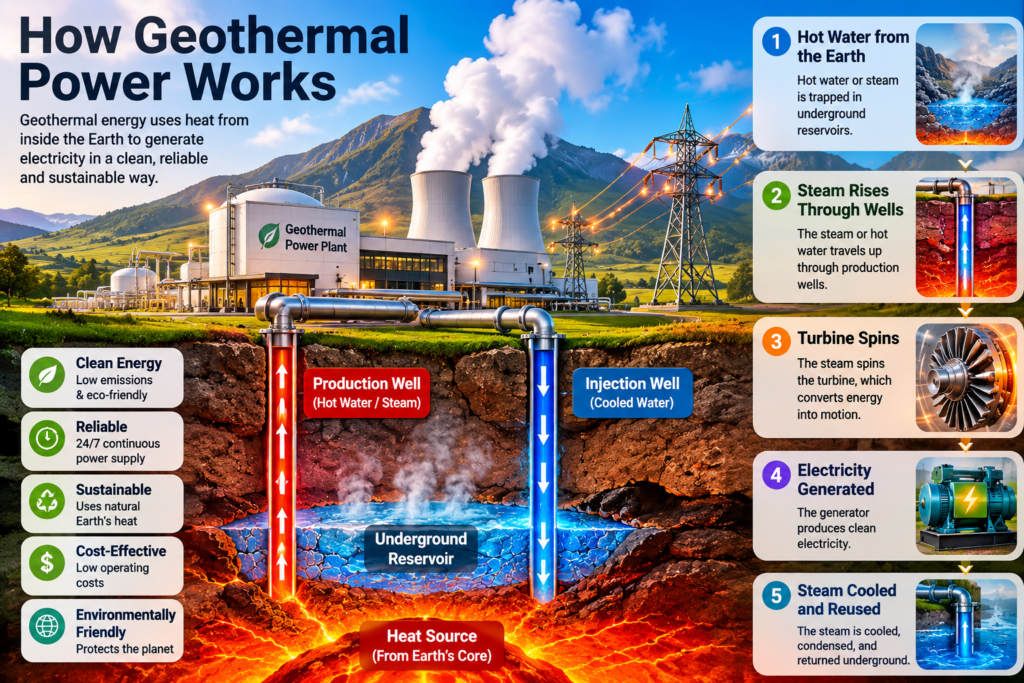
How geothermal power works begins deep beneath the Earth’s surface, where geothermal reservoirs contain naturally heated water and steam. These reservoirs are located in areas where underground temperatures are high, often near tectonic plate boundaries or volcanic regions.
Engineers drill production wells into these underground reservoirs to access the hot water or steam. Depending on the geothermal resource, the fluid may reach temperatures of over 150°C (302°F), making it suitable for electricity generation. The natural pressure within the reservoir helps move the hot fluid toward the surface
How Geothermal Power Works in a Geothermal Power Plant
Once the hot water or steam reaches the surface, how geothermal power works becomes a straightforward energy conversion process. The steam is directed toward a turbine inside the geothermal power plant. As the high-pressure steam flows across the turbine blades, it causes the turbine to spin at high speed.
The rotating turbine is connected to an electrical generator. As the generator spins, it converts mechanical energy into electrical energy through electromagnetic induction. The electricity produced is then transferred to transformers, where the voltage is increased before being transmitted through power lines to homes, businesses, and industries.
Types of Geothermal Power Plants
Several technologies demonstrate how geothermal power works under different geological conditions.
Dry Steam Power Plants use natural steam directly from underground reservoirs to spin turbines.
Flash Steam Power Plants bring high-pressure hot water to the surface, where pressure drops rapidly and part of the water instantly converts into steam. This steam powers the turbine while the remaining water is recycled.
Binary Cycle Power Plants transfer geothermal heat to a secondary liquid with a lower boiling point than water. The secondary fluid vaporizes, spins the turbine, and then condenses for reuse. Binary systems allow electricity generation from lower-temperature geothermal resources while producing very low emissions.
The Geothermal Energy Cycle
One of the greatest strengths of geothermal power is its sustainable operating cycle. After steam passes through the turbine, it is cooled and condensed back into water. Instead of being discarded, the cooled water is injected back underground through injection wells.
This reinjection process replenishes the geothermal reservoir, helps maintain underground pressure, and supports long-term resource sustainability. Because the water is continuously recycled, geothermal power plants consume relatively little freshwater compared with many conventional power stations.
Benefits of How Geothermal Power Works
Understanding how geothermal power works highlights why it is considered one of the most dependable renewable energy sources.
Geothermal power provides continuous electricity throughout the day and night without depending on sunlight or wind conditions. It produces significantly lower greenhouse gas emissions than coal or oil-fired power plants and occupies relatively small land areas compared with many other renewable energy facilities.
Geothermal plants also have long operating lifespans, often producing electricity for decades with proper maintenance. Stable operating costs and predictable electricity generation make geothermal power an attractive option for countries seeking energy security and reduced dependence on imported fuels.
Environmental Advantages
Geothermal power contributes to cleaner energy production by reducing carbon emissions and improving air quality. Modern geothermal facilities use advanced environmental monitoring systems, efficient drilling techniques, and closed-loop water recycling to minimize environmental impacts.
Responsible geothermal development protects groundwater resources, reduces waste, and supports sustainable natural resource management. When properly managed, geothermal energy provides renewable electricity while helping countries meet climate goals and transition toward lower-carbon energy systems.
Challenges and Future Development
Although geothermal power offers many advantages, several challenges remain. Suitable geothermal resources are geographically limited, and drilling deep production wells requires significant upfront investment. Geological exploration and reservoir assessment are also technically complex.
However, technological advances continue improving the future of geothermal energy. Enhanced Geothermal Systems (EGS), improved drilling technologies, digital monitoring, artificial intelligence, and more efficient turbines are expanding opportunities for geothermal development in new regions. These innovations may allow countries without traditional geothermal reservoirs to benefit from underground heat resources.
Conclusion
How geothermal power works demonstrates how the Earth’s natural heat can be transformed into reliable, renewable electricity. By extracting underground steam or hot water, spinning turbines, generating electricity, and recycling water back into geothermal reservoirs, geothermal power plants provide clean energy with low emissions and high reliability. As technology continues to advance, geothermal power will remain an important part of the global renewable energy mix, supporting energy security, environmental protection, and sustainable economic development for future generations.