
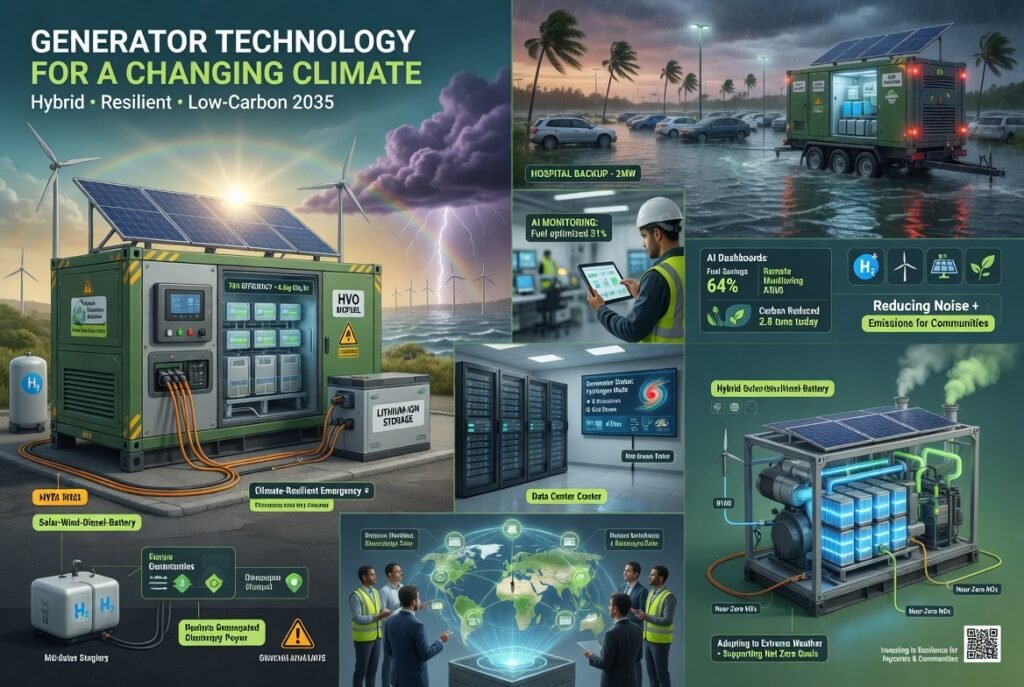
Generator Technology for Climate Change is becoming an essential part of the global effort to reduce greenhouse gas emissions and build a cleaner energy future. Traditional electricity generators powered by coal, diesel, and natural gas have supported economic growth for decades, but they also contribute significantly to carbon dioxide emissions. Today, advances in generator technology are making it possible to produce electricity more efficiently while integrating renewable energy sources such as solar, wind, hydro, biomass, and hydrogen. Modern generators are designed to deliver reliable power with lower environmental impacts, helping governments, businesses, and households respond to the challenges of climate change.
Generator Technology for Climate Change and Clean Energy
One of the greatest advantages of Generator Technology for Climate Change is its ability to support clean energy production. Modern generators are increasingly designed to operate with renewable energy systems instead of relying entirely on fossil fuels.
Solar-powered generators convert sunlight into electricity through photovoltaic panels and battery storage systems. Wind-powered generators transform the kinetic energy of moving air into electrical energy. Hydroelectric generators capture the energy of flowing water, while biomass generators produce electricity from organic materials such as agricultural waste, wood residues, and food waste.
These renewable technologies reduce dependence on fossil fuels while lowering greenhouse gas emissions, making electricity generation more environmentally friendly.
Generator Technology for Climate Change Improves Energy Efficiency
Improving energy efficiency is another important benefit of Generator Technology for Climate Change. Modern generator systems use advanced engineering, intelligent control systems, and high-efficiency components to generate more electricity while consuming less fuel.
Digital monitoring systems continuously measure performance, allowing operators to optimize fuel consumption and reduce unnecessary energy losses. Variable-speed generators automatically adjust output according to electricity demand, preventing waste and improving operational efficiency.
By producing more power from the same amount of energy input, efficient generators reduce operating costs while minimizing environmental impacts.
Generator Technology for Climate Change Reduces Carbon Emissions
Reducing carbon emissions is one of the primary goals of Generator Technology for Climate Change. Traditional diesel generators release significant amounts of carbon dioxide, nitrogen oxides, sulfur dioxide, and particulate matter into the atmosphere.
Modern low-emission generators address this challenge through cleaner fuels, improved combustion technology, advanced exhaust treatment systems, and renewable energy integration.
Hydrogen-powered generators produce electricity while emitting only water vapor during operation when using green hydrogen. Natural gas generators generally emit less carbon dioxide than coal-fired systems, while hybrid generators combine renewable energy with conventional backup power to reduce overall emissions.
These innovations contribute to cleaner air and help countries meet international climate commitments.
Generator Technology for Climate Change Supports Reliable Renewable Power
Renewable energy sources such as solar and wind depend on weather conditions, making energy storage and backup generation increasingly important. Generator Technology for Climate Change helps solve this challenge by supporting stable electricity supplies.
Hybrid generator systems combine renewable energy with battery storage and intelligent control software. During periods of low solar or wind production, generators automatically provide additional electricity to maintain continuous power.
Microgrids also use advanced generator technology to supply electricity to remote communities, hospitals, schools, industries, and emergency response centers. This improves energy security while reducing dependence on centralized fossil fuel power plants.
Generator Technology for Climate Change in Transportation and Industry
Transportation and industrial sectors are major contributors to global greenhouse gas emissions. Generator Technology for Climate Change supports cleaner operations across these industries.
Electric vehicle charging stations increasingly rely on renewable-powered generators to provide sustainable electricity. Construction companies are adopting battery-supported portable generators that reduce diesel consumption on job sites.
Manufacturing facilities use efficient combined heat and power (CHP) generators that simultaneously produce electricity and useful heat, significantly improving overall energy efficiency.
Data centers, airports, hospitals, and telecommunications facilities also benefit from modern backup generators that provide reliable electricity with lower emissions.
Generator Technology for Climate Change Encourages Innovation
Technological innovation continues to improve generator performance every year. Engineers are developing smarter generators equipped with artificial intelligence, Internet of Things (IoT) sensors, predictive maintenance software, and cloud-based monitoring systems.
These intelligent systems detect equipment problems before failures occur, reducing maintenance costs and increasing operational reliability.
Research is also advancing hydrogen fuel cells, advanced battery technologies, solid-state energy storage, and carbon capture systems that may further reduce emissions associated with electricity generation.
As innovation accelerates, future generators are expected to become cleaner, quieter, more efficient, and increasingly integrated with renewable energy systems.
Generator Technology for Climate Change Benefits Communities
Communities around the world benefit significantly from cleaner generator technology. Reliable electricity supports healthcare services, education, communications, agriculture, emergency response, and economic development.
In rural and off-grid regions, renewable-powered generators provide electricity without requiring expensive transmission infrastructure. Solar generators can power schools, clinics, water pumps, and communication systems where grid electricity is unavailable.
Following natural disasters, portable clean-energy generators provide emergency power for rescue operations, medical facilities, shelters, and disaster recovery efforts.
These technologies improve resilience while reducing pollution and supporting sustainable development.
Challenges Facing Generator Technology for Climate Change
Despite its many advantages, Generator Technology for Climate Change still faces several challenges. Initial installation costs for advanced renewable generator systems may be higher than conventional diesel generators, although operating costs are generally much lower over time.
Renewable energy generation depends on weather conditions, making battery storage and hybrid systems essential for maintaining continuous electricity supplies.
Developing countries may also require greater investment in infrastructure, technical training, financing, and supportive government policies to accelerate the adoption of modern generator technologies.
Continued research, international cooperation, and public-private partnerships will help overcome these barriers.
The Future of Generator Technology for Climate Change
The future of Generator Technology for Climate Change is highly promising. Advances in renewable energy, artificial intelligence, battery storage, hydrogen production, and smart grid technologies are transforming electricity generation worldwide.
Future generators will likely operate with minimal emissions while automatically balancing renewable energy production, battery storage, and electricity demand. Artificial intelligence will further optimize energy management, improving efficiency and reducing operational costs.
Governments are introducing policies that encourage investment in low-carbon technologies, creating new opportunities for businesses, researchers, and communities to accelerate the clean energy transition.
As renewable energy becomes more affordable, modern generator technology will play a central role in building resilient, sustainable, and environmentally responsible power systems.
Conclusion
Generator Technology for Climate Change represents one of the most important innovations supporting the global transition to sustainable energy. By improving energy efficiency, reducing greenhouse gas emissions, integrating renewable energy sources, and increasing electricity reliability, modern generators help address some of the world’s most pressing environmental challenges.
Although challenges such as initial investment costs and renewable energy variability remain, ongoing technological innovation continues to improve performance and affordability. As countries work toward climate goals and cleaner energy systems, generator technology will remain a key component of sustainable development, helping create a healthier environment and a more resilient future for generations to come.