
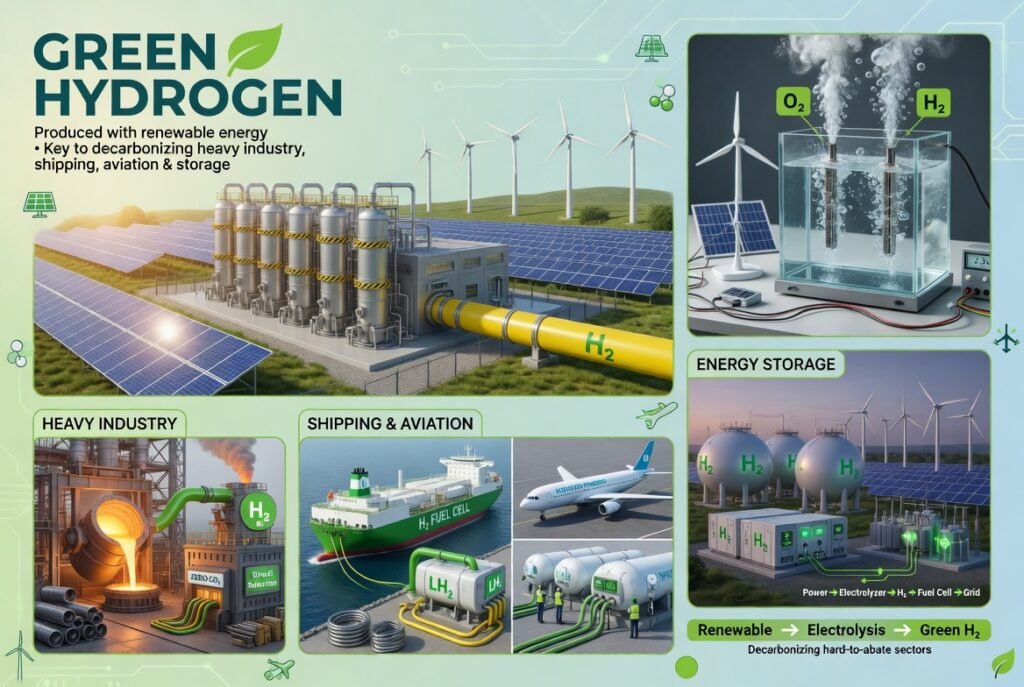
Green hydrogen is quickly becoming one of the most talked-about topics in clean energy — and for good reason. As the world looks for ways to cut pollution and fight climate change, green hydrogen offers a powerful, eco-friendly solution. But what exactly is it, and why does it matter? This beginner-friendly guide breaks it all down in simple terms
What Is Green Hydrogen?
Green hydrogen is hydrogen fuel that is produced using renewable energy, such as solar or wind power, with little to no harmful emissions. Hydrogen itself is the most abundant element in the universe, but it rarely exists on its own. It’s usually bonded to other elements — for example, in water (H₂O), where hydrogen is combined with oxygen.
To use hydrogen as a fuel, we first have to separate it from these other elements. The way we do this is what makes hydrogen “green,” “grey,” or “blue.” Green hydrogen stands out because the entire process is powered by clean, renewable energy.
How Is Green Hydrogen Made?
Green hydrogen is produced through a process called electrolysis. Here’s how it works in simple steps:
- Start with water. Electrolysis uses plain water (H₂O) as its raw material.
- Add renewable electricity. Electricity from solar panels or wind turbines is passed through the water.
- Split the water. A device called an electrolyzer uses that electricity to split water into its two parts: hydrogen and oxygen.
- Capture the hydrogen. The hydrogen gas is collected and stored, ready to be used as clean fuel. The only by-product is oxygen, which is released harmlessly into the air.
Because the electricity comes from renewable sources, no carbon dioxide or other greenhouse gases are released. This is what makes the hydrogen truly “green.”
Green vs. Grey vs. Blue Hydrogen
You may have heard hydrogen described using different colors. These colors describe how the hydrogen is made, not the gas itself:
- Grey hydrogen is made from natural gas and releases a lot of carbon dioxide. It’s the most common type today but also the most polluting.
- Blue hydrogen is also made from natural gas, but the carbon emissions are captured and stored to reduce pollution.
- Green hydrogen is made using renewable energy and produces virtually no emissions — making it the cleanest option of all.
Why Does Green Hydrogen Matter?
Green hydrogen is exciting because it could help solve some of the biggest challenges in the clean energy transition. Here are a few key reasons it matters:
- It’s clean. Producing and using green hydrogen creates no harmful greenhouse gas emissions.
- It’s versatile. Hydrogen can power cars, trucks, ships, and even airplanes. It can also heat homes and run factories.
- It stores energy. Solar and wind power don’t always produce energy when we need it. Green hydrogen can store extra energy for later use, helping to balance the grid.
- It supports hard-to-clean industries. Some industries, like steel and cement production, are very difficult to run on electricity alone. Green hydrogen offers a clean alternative
What Are the Challenges?
While green hydrogen is promising, it isn’t perfect yet. Right now, it’s more expensive to produce than grey or blue hydrogen, mainly because renewable electricity and electrolyzers can be costly. Building the infrastructure to store and transport hydrogen also takes time and investment.
The good news is that costs are falling fast. As renewable energy becomes cheaper and technology improves, experts expect green hydrogen to become far more affordable and widespread in the years ahead.
The Future of Green Hydrogen
Governments and companies around the world are investing heavily in green hydrogen. Many see it as a key part of reaching net-zero emissions and building a cleaner, more sustainable future. From powering vehicles to fueling industries, green hydrogen could play a major role in how we produce and use energy in the decades to come.
Final Thoughts
Green hydrogen is a clean, renewable fuel made by splitting water using solar or wind energy. It produces no harmful emissions, can be used in many ways, and helps store renewable energy for when it’s needed most. While there are still challenges to overcome, green hydrogen has enormous potential to transform the way the world powers itself.
As technology advances and costs continue to drop, green hydrogen may well become one of the cornerstones of a cleaner, greener planet. Now that you understand the basics, you’re ready to follow this exciting energy revolution as it unfolds.